martes, 29 de noviembre de 2011
ANTHROPOLOGICAL LINGUISTICS
Anthropological linguistics is the study of the relations between language and culture and the relations between human biology, cognition and language.
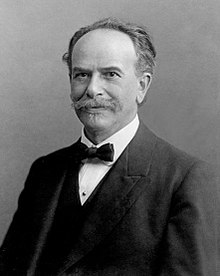
Franz Boas was one of the principal founders of modern American Anthropology and Ethnology. He was born in Minden, Germany, west of Hannover, and studied physics, geography, and geology at various universities, finishing his Ph.D. in Kiel in 1881. In the holistic tradition established by Franz Boas in the USA at the beginning of the twentieth century, anthropology was conceived as comprising four subfields: archaeology, physical (now `biological') anthropology, linguistics (now `linguistic anthropology'), and ethnology (now `sociocultural anthropology'). Boas contributed to all four of his named branches of anthropology, in studies ranging from racial classification to linguistic description focusing primarily on the languages and the peoples of northwestern U.S. and Canada.
His personal research contributions gave him an important place in the history of anthropology. Even Boas has been called the "Father of American Anthropology" and "the Father of Modern Anthropology.” Although Boas published descriptive studies of Native American languages, and wrote on theoretical difficulties in classifying languages, he left it to colleagues and students such as Edward Sapir to research the relationship between culture and language.
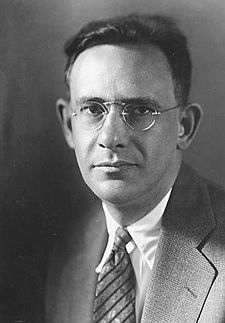
Edward Sapir (1884–1939) was a German-born American anthropologist-linguist and a leader in American structural linguistics. His name is borrowed in what is now called the Sapir–Whorf hypothesis. He was a highly influential figure in American linguistics, influencing several generations of linguists across several schools of the discipline.
During his lifetime Sapir was highly regarded for his work on language—his groundbreaking studies of Native American languages broke the myriad of languages down into six categories—and for his insistence that discussion of a wider culture was necessarily connected to discussion of the individual within that culture.
Sapir suggested that man perceives the world principally through language. He wrote many articles on the relationship of language to culture. A thorough description of a linguistic structure and its function in speech might, he wrote in 1931, provide insight into man’s perceptive and cognitive faculties and help explain the diverse behavior among peoples of different cultural backgrounds.
Linguistic relativity is a general term used to refer to various hypotheses or positions about the relationship between language and culture.
For Sapir, linguistic relativity was a way of articulating what he saw as the struggle between the individual and society. In order to communicate their unique experiences, individuals need to rely on a public code over which they have little control.
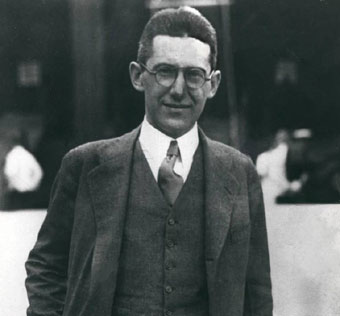
Benjamin Lee Whorf after 1931 entered into contact with Sapir and his students at Yale. Although Whorf started out sharing several of the basic positions held by Boas and Sapir on the nature of linguistic classification, he developed his own conceptual framework, which included the distinction between overt and covert grammatical categories, and an important analytical tool for understanding what kinds of categorical distinctions speakers are sensitive to this issue was later further developed in the work on metapragmatics.
Sapir and Whorf's ideas about the unconscious aspects of linguistic codes continued to play an important part in the history of linguistic anthropology, and reappeared in the 1980s in the context of a number of research projects, including the study of language ideology.
Benjamin Lee Whorf after 1931 entered into contact with Sapir and his students at Yale. Although Whorf started out sharing several of the basic positions held by Boas and Sapir on the nature of linguistic classification, he developed his own conceptual framework, which included the distinction between overt and covert grammatical categories, and an important analytical tool for understanding what kinds of categorical distinctions speakers are sensitive to this issue was later further developed in the work on metapragmatics.
Sapir and Whorf's ideas about the unconscious aspects of linguistic codes continued to play an important part in the history of linguistic anthropology, and reappeared in the 1980s in the context of a number of research projects, including the study of language ideology.
THE FORMALISM BASED ON NOAM CHOMSKY
The formalism of context-free grammars was developed in the mid-1950s by Noam Chomsky, and also their classification as a special type of formal grammar (which he called phrase-structure grammars).
In Chomsky's generative grammar framework, the syntax of natural language was described by a context-free rules combined with transformation rules. In later work (e.g. Chomsky 1981), the idea of formulating a grammar consisting of explicit rewrite rules was abandoned. In other generative frameworks, e.g. Generalized Phrase Structure Grammar (Gazdar et al. 1985), context-free grammars were taken to be the mechanism for the entire syntax, eliminating transformations.
Formal language theory, the discipline which studies formal grammars and languages, is a branch of applied mathematics . Its applications are found in theoretical computer science, theoretical linguistics, formal semantics, mathematical logic, and other areas.
The linguistic formalism derived from Chomsky can be characterized by a focus on innate universal grammar (UG), and a disregard for the role of stimuli.
The formalist propositions regarding innateness and stimuli do fit extensively with the cognitive opposition to behaviouristic psychology
THE COPENHAGEN SCHOOL
The Copenhagen School, officially the "Linguistic Circle of Copenhagen (Cercle Linguistique de Copenhague)", was a group of scholars dedicated to the study of structural linguistics founded by Louis Hjelmslev and Viggo Brøndal. In the mid twentieth century the Copenhagen school was one of the most important centres of linguistic structuralism together with the Geneva School and thePrague School.
Hjelmslev's objective was to establish a framework for understanding communication as a formal system, and an important part of this was the development of precise terminology to describe the different parts of linguistic systems and their interrelatedness.
In 1989 a group of members of the Copenhagen Linguistic circle inspired by the advances in cognitive linguistics and the functionalist theories of Simon C. Dik founded the School of Danish Functional Grammar aiming to combine the ideas of Hjelmslev and Brøndal, and other important Danish linguists such as Paul Diderichsen and Otto Jespersen with modern functional linguistics.
Louis Hjelmslev (October 3, 1899, Copenhagen – May 30, 1965, Copenhagen) was a Danish linguist whose ideas formed the basis of the Copenhagen School of linguistics. Born into an academic family, Hjelmslev studied comparative linguistics in Copenhagen, Prague and Paris (with a.o.Antoine Meillet and Joseph Vendryes).
The Linguistic Circle of Copenhagen was founded by Hjelmslev and a group of Danish colleagues on September 24, 1931. Their main inspiration was the Prague Linguistic Circle, which had been founded in 1926.
Hjelmslev's importance in semiotics is a result of his rigorous attempt to turn Saussure's heterogenous and somewhat flexible structuralism into a theory of maximal explicitness and conceptual homogeneity on all levels. Moreover, his willingness to reconsider, albeit somewhat reluctantly, the formal limits of his theory sets the standard for any serious semiotic research.
martes, 20 de septiembre de 2011
The London school
England is a country ib which certain aspects of linguistics have an usually long history. Lingustic description becomes a matter of practical importance to a nation when it envolves a standard or "official" language for itself out of the welter of diverse and conflicting local usages normally found in any territory that has been settled for a considerable time, and it happens that in this respect England was, briefly, far in advance of Europe.
Elsewhere, the cultural dominance of Latin together with the supranational mediaval world-view made contemporary languages seem to be mere vulgar local vernaculars unworthy of serious study; but England was already develping a recognized standard language by the eleventh century.
The man who turned linguistic proper into a recognized, distinct acedemic subject in Britain was J.R. Firth (1890-1960).
Firth argue, correctly in my view, that phonemicits are led into error by the nature of European writing systems. A phonemic transcription, after all represents a fully consistent application of the particular principles of orthography on which European alphabetic scripts happen to be more or less accurately based.
The concept of the prosodic unit in phonology seems so attractive and natural that it is suprising to find that it is not more widespread. The generative phonologists seem to have been so intent on arguin for the "horizontal" division of a stretch of speech-sound into distinctive features (as against those Descriptivists who thought of phonemes as indivisible atoms) that they have never thought to call into question the "vertical" division into segments.
To understand Firth's notion of meaning, we must examine the linguistic ideas of his colleague Bronislaw Malinowski (1884-1942). Professor of Antrophology at the London School of Economics from 1927 onwards. For Malinowski, to think on languages as a "means of tranfusing ideas from the head of the speaker to that of the listener" was a misleading myth to speak, partivulary in a primitive culture, is no to tell but to do.
"A RICH AND ADAPTABLE INSTRUMENT"
The teacher of English who, when seeking ans adequate definition of language to guide him in his work, meets a cautious "well, it depends, on how yo look at it" is likely to share the natural impatience felt by anyone who finds himself unable to elicit 'a straight answer to a straight question". But the very frequency of this complaint may suggest that, perhaps, questions are seldom as straight as they seem.
Language as an instrument of control has another side to it, since the cilds is well aware thet languge is also a means whereby others exercise control over him. Closely related to the instrumental model, therefore. is the regulatory model of language.
sábado, 17 de septiembre de 2011
Functions of Languages
Functions of languages
*Language must be investigated in all the variety of its functions .
*The ADRESSER sends a MESSAGE to the ADDRESSEE. To be operative the message requires a CONTEXT refered to (“referent” in another, somewhat, ambiguo, nomenclature). Seizable by the addressee, and either verbal o capable of being verbalized; a CODE fully, or at least parcially, common to the addresser and addressee; and finally, a CONTACT, a physical channel and psychological connexion between the addresser and the addressee. Enabling both of them to enter and stay in comunication.
CONTEXT
MESSAGE
ADRESSER ----------------------------------------------------------------------------------- ADDRESSEE
CONTACT
CODE
Functional Linguistics: the Prague School
The Prague School practised a special style of synchronic linguistcs, and although most of the scholars whom one thinks of as members of the school worked in Prague or at least in Czechoslovakia, the term is used also to cover certain scholars elsewhere who consiciously adhered to the Prague style.
Prague linguists on the other hand, looked at languages as one might look at a motor, seeking to understand what jobs the various components were doing and how the nature of one component determined the nature of others.
As long as their were describing the structure of a language, the practice of the Prague School wsa not very diffrent from that of their contemporaries-they used the notion "phoneme"and "morpheme", for instance; but they tried to go beyond description to explanation, saying not just what languages were like but what they were the way they were. American linguists restricted themselves (and still restrict themselves) to description.
Phonetics and phonology
Phonetics and phonology have undergone a number of changes over the last 25 years, and phonology and particular has been subject to major theorical revisions. Despite these changes, it is the more traditional articulatory phonetics and phonology that still make the greatest contribution to applied linguistic.
Nineteenth century: historical llinguistics
Sir William Jones, read a paper to the Royal Asiatic Society in Calcutta pointing out that Sanskrit (the old Indian language) Greek, Latin, Celtic and Germanic all had striking structural similarities.
Sir Williams Jones' discovery fired the imagination of scholars. For the next hundred years, all other linguistics work was eclipsed by the general preoccupation with writing comparative grammars, grammars which first compared the different linguistic forms found in the various members of the Indo-European language famil, and second, attempted to set up a hypothetical ancestor, Proto-Indo-European, from all these languages were descended.
EARLY-TO MID-20TH CENTURY: DESCRIPTIVE LINGUISTICS
Ferdinand de Saussur, who is sometimes labelled "the father of modern lisguistics. De Saussure's crucial contribution was his explicit and reiterated statement that all languages items are essentially interlinked. This was an aspect of language which had not been stressed before. His insstence that language is a carefully built structure of interwoven elements initiated the era of structural linguistics.
NID-TO-LATE-20TH CENTURY: GENERATIVE LINGUISTICS AND THE SEARCH OF UNIVERSALS.
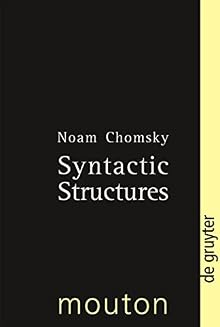
Noam chomsky then aged, twenty-nine, a teacher at the Massachusetts Institute of Technology, published book called Syntactic Structures. This little book started a revolution in linguistics. Chomsky is, arguably, the most influential linguist of the century. Certainly, he is the linguist whose reputation has spread furthest outside linguistics.
Sir Williams Jones' discovery fired the imagination of scholars. For the next hundred years, all other linguistics work was eclipsed by the general preoccupation with writing comparative grammars, grammars which first compared the different linguistic forms found in the various members of the Indo-European language famil, and second, attempted to set up a hypothetical ancestor, Proto-Indo-European, from all these languages were descended.
EARLY-TO MID-20TH CENTURY: DESCRIPTIVE LINGUISTICS
Ferdinand de Saussur, who is sometimes labelled "the father of modern lisguistics. De Saussure's crucial contribution was his explicit and reiterated statement that all languages items are essentially interlinked. This was an aspect of language which had not been stressed before. His insstence that language is a carefully built structure of interwoven elements initiated the era of structural linguistics.
NID-TO-LATE-20TH CENTURY: GENERATIVE LINGUISTICS AND THE SEARCH OF UNIVERSALS.
Noam chomsky then aged, twenty-nine, a teacher at the Massachusetts Institute of Technology, published book called Syntactic Structures. This little book started a revolution in linguistics. Chomsky is, arguably, the most influential linguist of the century. Certainly, he is the linguist whose reputation has spread furthest outside linguistics.
miércoles, 14 de septiembre de 2011
Fundamental Works
http://www.beaugrande.com/lingtherlinguistic%20theory%20title.htm
In this page you can find some authors that were importans for the Linguistic theory, and what aportations they did.
Noam Chomsky
Chomsky`s work has fundamentally affected views of what of linguistics is or should be, reopened issues many linguistics had long thought were settled.
Yet many of his ideas are conservative in that thay derieve from traditional philosophy, grammar, and logic. The most "revolutionary" aspect lies in his claims about how these ideas apply to language and linguistics.
A skillful public debater, Chomsky intensifies the forensic and polemical aspects of the discipline by using theorical arguments about "the nature of language" to fortify his positions against competitors. He foregrounds poinst of contention even where he implicity agrees with or borrows from his asversaries, and uses a highly confident rethoric for his "tentative" views and proposals. His argumentation oscillates from intuitive reasoning and philosophical speculations on "the mind" , over to technical points drawn from formal language theory and from such sciences as biology and neurology. Due in part to this diversity of sources, his terminology and notation take on a strategic plurality of meanings.
miércoles, 17 de agosto de 2011
Suscribirse a:
Entradas (Atom)