ANTHROPOLOGICAL LINGUISTICS
Anthropological linguistics is the study of the relations between language and culture and the relations between human biology, cognition and language.
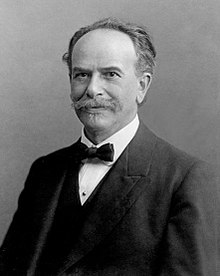
Franz Boas was one of the principal founders of modern American Anthropology and Ethnology. He was born in Minden, Germany, west of Hannover, and studied physics, geography, and geology at various universities, finishing his Ph.D. in Kiel in 1881. In the holistic tradition established by Franz Boas in the USA at the beginning of the twentieth century, anthropology was conceived as comprising four subfields: archaeology, physical (now `biological') anthropology, linguistics (now `linguistic anthropology'), and ethnology (now `sociocultural anthropology'). Boas contributed to all four of his named branches of anthropology, in studies ranging from racial classification to linguistic description focusing primarily on the languages and the peoples of northwestern U.S. and Canada.
His personal research contributions gave him an important place in the history of anthropology. Even Boas has been called the "Father of American Anthropology" and "the Father of Modern Anthropology.” Although Boas published descriptive studies of Native American languages, and wrote on theoretical difficulties in classifying languages, he left it to colleagues and students such as Edward Sapir to research the relationship between culture and language.
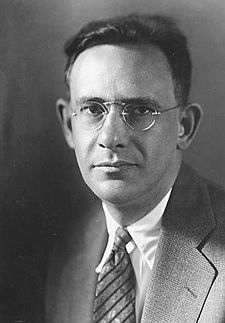
Edward Sapir (1884–1939) was a German-born American anthropologist-linguist and a leader in American structural linguistics. His name is borrowed in what is now called the Sapir–Whorf hypothesis. He was a highly influential figure in American linguistics, influencing several generations of linguists across several schools of the discipline.
During his lifetime Sapir was highly regarded for his work on language—his groundbreaking studies of Native American languages broke the myriad of languages down into six categories—and for his insistence that discussion of a wider culture was necessarily connected to discussion of the individual within that culture.
During his lifetime Sapir was highly regarded for his work on language—his groundbreaking studies of Native American languages broke the myriad of languages down into six categories—and for his insistence that discussion of a wider culture was necessarily connected to discussion of the individual within that culture.
Sapir suggested that man perceives the world principally through language. He wrote many articles on the relationship of language to culture. A thorough description of a linguistic structure and its function in speech might, he wrote in 1931, provide insight into man’s perceptive and cognitive faculties and help explain the diverse behavior among peoples of different cultural backgrounds.
Linguistic relativity is a general term used to refer to various hypotheses or positions about the relationship between language and culture.
For Sapir, linguistic relativity was a way of articulating what he saw as the struggle between the individual and society. In order to communicate their unique experiences, individuals need to rely on a public code over which they have little control.

Benjamin Lee Whorf after 1931 entered into contact with Sapir and his students at Yale. Although Whorf started out sharing several of the basic positions held by Boas and Sapir on the nature of linguistic classification, he developed his own conceptual framework, which included the distinction between overt and covert grammatical categories, and an important analytical tool for understanding what kinds of categorical distinctions speakers are sensitive to this issue was later further developed in the work on metapragmatics.

Sapir and Whorf's ideas about the unconscious aspects of linguistic codes continued to play an important part in the history of linguistic anthropology, and reappeared in the 1980s in the context of a number of research projects, including the study of language ideology.
Benjamin Lee Whorf after 1931 entered into contact with Sapir and his students at Yale. Although Whorf started out sharing several of the basic positions held by Boas and Sapir on the nature of linguistic classification, he developed his own conceptual framework, which included the distinction between overt and covert grammatical categories, and an important analytical tool for understanding what kinds of categorical distinctions speakers are sensitive to this issue was later further developed in the work on metapragmatics.
Sapir and Whorf's ideas about the unconscious aspects of linguistic codes continued to play an important part in the history of linguistic anthropology, and reappeared in the 1980s in the context of a number of research projects, including the study of language ideology.

No hay comentarios:
Publicar un comentario