Nineteenth century: historical llinguistics
Sir William Jones, read a paper to the Royal Asiatic Society in Calcutta pointing out that Sanskrit (the old Indian language) Greek, Latin, Celtic and Germanic all had striking structural similarities.
Sir Williams Jones' discovery fired the imagination of scholars. For the next hundred years, all other linguistics work was eclipsed by the general preoccupation with writing comparative grammars, grammars which first compared the different linguistic forms found in the various members of the Indo-European language famil, and second, attempted to set up a hypothetical ancestor, Proto-Indo-European, from all these languages were descended.
EARLY-TO MID-20TH CENTURY: DESCRIPTIVE LINGUISTICS
Ferdinand de Saussur, who is sometimes labelled "the father of modern lisguistics. De Saussure's crucial contribution was his explicit and reiterated statement that all languages items are essentially interlinked. This was an aspect of language which had not been stressed before. His insstence that language is a carefully built structure of interwoven elements initiated the era of structural linguistics.
NID-TO-LATE-20TH CENTURY: GENERATIVE LINGUISTICS AND THE SEARCH OF UNIVERSALS.
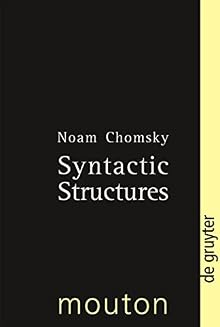
Noam chomsky then aged, twenty-nine, a teacher at the Massachusetts Institute of Technology, published book called Syntactic Structures. This little book started a revolution in linguistics. Chomsky is, arguably, the most influential linguist of the century. Certainly, he is the linguist whose reputation has spread furthest outside linguistics.



No hay comentarios:
Publicar un comentario