martes, 29 de noviembre de 2011
ANTHROPOLOGICAL LINGUISTICS
Anthropological linguistics is the study of the relations between language and culture and the relations between human biology, cognition and language.
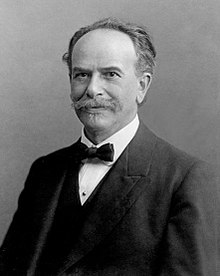
Franz Boas was one of the principal founders of modern American Anthropology and Ethnology. He was born in Minden, Germany, west of Hannover, and studied physics, geography, and geology at various universities, finishing his Ph.D. in Kiel in 1881. In the holistic tradition established by Franz Boas in the USA at the beginning of the twentieth century, anthropology was conceived as comprising four subfields: archaeology, physical (now `biological') anthropology, linguistics (now `linguistic anthropology'), and ethnology (now `sociocultural anthropology'). Boas contributed to all four of his named branches of anthropology, in studies ranging from racial classification to linguistic description focusing primarily on the languages and the peoples of northwestern U.S. and Canada.
His personal research contributions gave him an important place in the history of anthropology. Even Boas has been called the "Father of American Anthropology" and "the Father of Modern Anthropology.” Although Boas published descriptive studies of Native American languages, and wrote on theoretical difficulties in classifying languages, he left it to colleagues and students such as Edward Sapir to research the relationship between culture and language.
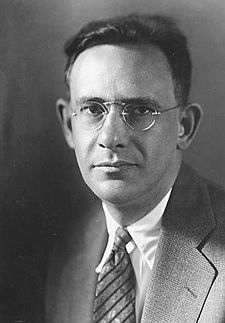
Edward Sapir (1884–1939) was a German-born American anthropologist-linguist and a leader in American structural linguistics. His name is borrowed in what is now called the Sapir–Whorf hypothesis. He was a highly influential figure in American linguistics, influencing several generations of linguists across several schools of the discipline.
During his lifetime Sapir was highly regarded for his work on language—his groundbreaking studies of Native American languages broke the myriad of languages down into six categories—and for his insistence that discussion of a wider culture was necessarily connected to discussion of the individual within that culture.
Sapir suggested that man perceives the world principally through language. He wrote many articles on the relationship of language to culture. A thorough description of a linguistic structure and its function in speech might, he wrote in 1931, provide insight into man’s perceptive and cognitive faculties and help explain the diverse behavior among peoples of different cultural backgrounds.
Linguistic relativity is a general term used to refer to various hypotheses or positions about the relationship between language and culture.
For Sapir, linguistic relativity was a way of articulating what he saw as the struggle between the individual and society. In order to communicate their unique experiences, individuals need to rely on a public code over which they have little control.
Benjamin Lee Whorf after 1931 entered into contact with Sapir and his students at Yale. Although Whorf started out sharing several of the basic positions held by Boas and Sapir on the nature of linguistic classification, he developed his own conceptual framework, which included the distinction between overt and covert grammatical categories, and an important analytical tool for understanding what kinds of categorical distinctions speakers are sensitive to this issue was later further developed in the work on metapragmatics.
Sapir and Whorf's ideas about the unconscious aspects of linguistic codes continued to play an important part in the history of linguistic anthropology, and reappeared in the 1980s in the context of a number of research projects, including the study of language ideology.
Benjamin Lee Whorf after 1931 entered into contact with Sapir and his students at Yale. Although Whorf started out sharing several of the basic positions held by Boas and Sapir on the nature of linguistic classification, he developed his own conceptual framework, which included the distinction between overt and covert grammatical categories, and an important analytical tool for understanding what kinds of categorical distinctions speakers are sensitive to this issue was later further developed in the work on metapragmatics.
Sapir and Whorf's ideas about the unconscious aspects of linguistic codes continued to play an important part in the history of linguistic anthropology, and reappeared in the 1980s in the context of a number of research projects, including the study of language ideology.
THE FORMALISM BASED ON NOAM CHOMSKY
The formalism of context-free grammars was developed in the mid-1950s by Noam Chomsky, and also their classification as a special type of formal grammar (which he called phrase-structure grammars).
In Chomsky's generative grammar framework, the syntax of natural language was described by a context-free rules combined with transformation rules. In later work (e.g. Chomsky 1981), the idea of formulating a grammar consisting of explicit rewrite rules was abandoned. In other generative frameworks, e.g. Generalized Phrase Structure Grammar (Gazdar et al. 1985), context-free grammars were taken to be the mechanism for the entire syntax, eliminating transformations.
Formal language theory, the discipline which studies formal grammars and languages, is a branch of applied mathematics . Its applications are found in theoretical computer science, theoretical linguistics, formal semantics, mathematical logic, and other areas.
The linguistic formalism derived from Chomsky can be characterized by a focus on innate universal grammar (UG), and a disregard for the role of stimuli.
The formalist propositions regarding innateness and stimuli do fit extensively with the cognitive opposition to behaviouristic psychology
THE COPENHAGEN SCHOOL
The Copenhagen School, officially the "Linguistic Circle of Copenhagen (Cercle Linguistique de Copenhague)", was a group of scholars dedicated to the study of structural linguistics founded by Louis Hjelmslev and Viggo Brøndal. In the mid twentieth century the Copenhagen school was one of the most important centres of linguistic structuralism together with the Geneva School and thePrague School.
Hjelmslev's objective was to establish a framework for understanding communication as a formal system, and an important part of this was the development of precise terminology to describe the different parts of linguistic systems and their interrelatedness.
In 1989 a group of members of the Copenhagen Linguistic circle inspired by the advances in cognitive linguistics and the functionalist theories of Simon C. Dik founded the School of Danish Functional Grammar aiming to combine the ideas of Hjelmslev and Brøndal, and other important Danish linguists such as Paul Diderichsen and Otto Jespersen with modern functional linguistics.
Louis Hjelmslev (October 3, 1899, Copenhagen – May 30, 1965, Copenhagen) was a Danish linguist whose ideas formed the basis of the Copenhagen School of linguistics. Born into an academic family, Hjelmslev studied comparative linguistics in Copenhagen, Prague and Paris (with a.o.Antoine Meillet and Joseph Vendryes).
The Linguistic Circle of Copenhagen was founded by Hjelmslev and a group of Danish colleagues on September 24, 1931. Their main inspiration was the Prague Linguistic Circle, which had been founded in 1926.
Hjelmslev's importance in semiotics is a result of his rigorous attempt to turn Saussure's heterogenous and somewhat flexible structuralism into a theory of maximal explicitness and conceptual homogeneity on all levels. Moreover, his willingness to reconsider, albeit somewhat reluctantly, the formal limits of his theory sets the standard for any serious semiotic research.
Suscribirse a:
Entradas (Atom)